
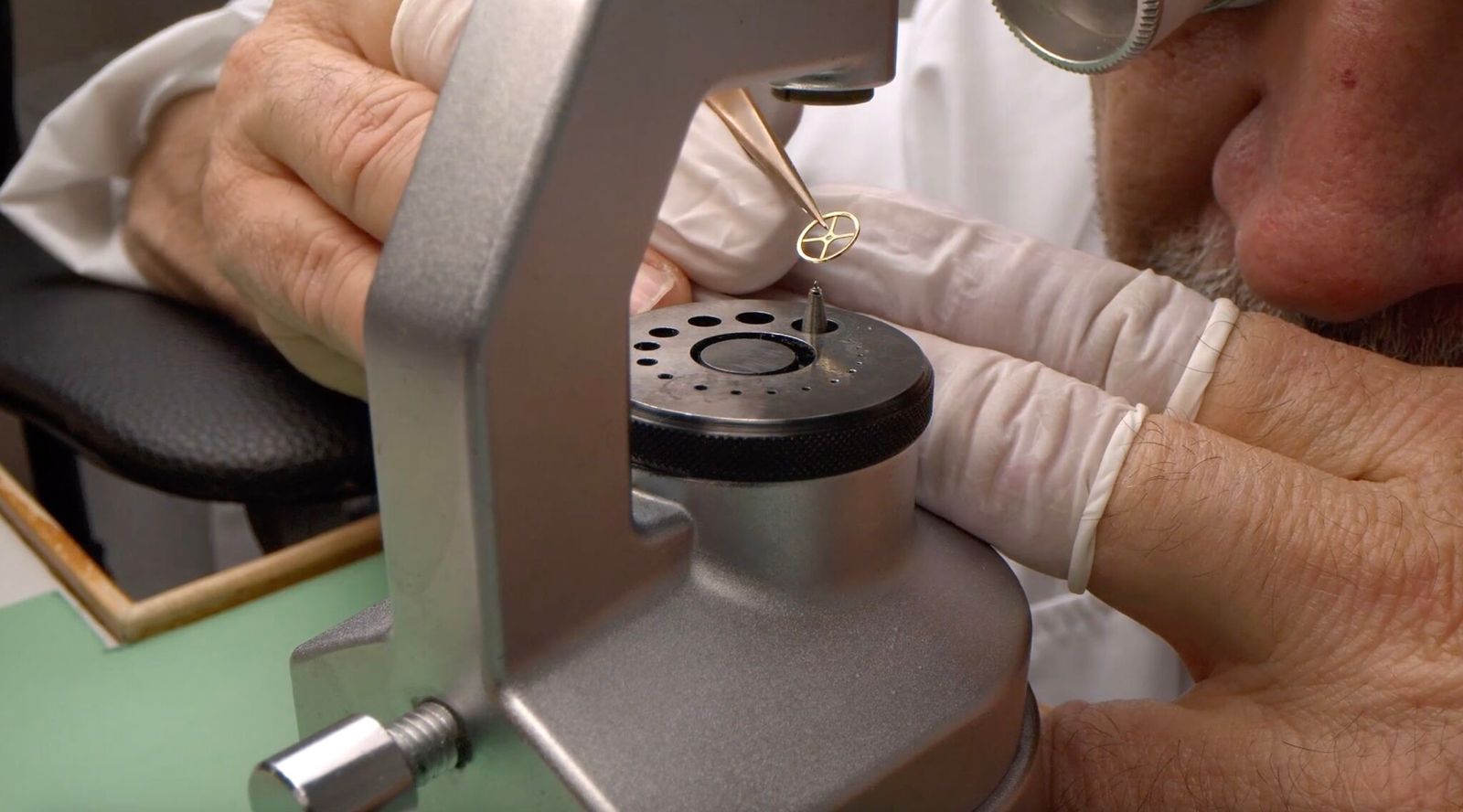
For generations, precision regulation in mechanical watchmaking has been regarded as one of the most refined skills of the craft. An experienced watchmaker does not merely adjust a movement; he or she interprets it—analyzing amplitude, positional behavior, daily rate stability, and the movement’s response to external influences such as temperature variation, magnetism, and shock. This tradition forms the foundation of modern micro-regulation in mechanical watchmaking, where human expertise remains invaluable as a testament to the artistry of horology.
Today, that expertise remains essential, but watchmaking has entered a new, technologically advanced phase. Modern micro-regulation in mechanical watchmaking represents a profound evolution of fine adjustment, driven by cutting-edge advances in engineering, materials science, and component design. The result is a level of precision that is fundamentally more stable, predictable, and durable—effectively reshaping and elevating traditional chronometric standards.
From Artisanal Adjustment to Engineering-Assisted Precision: A Paradigm Shift
In classical watchmaking, rate adjustment relied primarily on the index regulator system. This traditional method alters the effective length of the hairspring via curb pins, much like adjusting the length of a pendulum. While this method delivered acceptable precision for decades, it introduced inherent physical limitations:
• Distortion of the hairspring’s natural geometry: The physical interaction with the regulator pins can disrupt the ideal, concentric “breathing” (expansion and contraction) of the hairspring.
• High sensitivity to shock and vibration: External forces can easily cause the regulator pins to shift, leading to immediate rate deviation.
• Rate variation due to component aging: The materials used in older systems were more susceptible to environmental degradation and gradual loss of elasticity.
• Strong dependence on frequent manual readjustment: Maintaining optimal performance often required regular visits to the watchmaker.
Contemporary manufactures have increasingly identified these weaknesses and are progressively replacing such systems with modern solutions that offer far greater physical and chronometric stability.
The Dominance of Free-Sprung Variable-Inertia Balances
The free-sprung, variable-inertia balance has rapidly become the new benchmark in high-end mechanical watchmaking. In this sophisticated configuration, the hairspring length is fixed and unregulated. Instead, rate adjustment is achieved by modifying the inertia of the balance wheel itself through micro-weights or screws precisely positioned on its rim, without altering the effective length or natural geometry of the hairspring.
This approach delivers decisive advantages that fundamentally enhance performance:
• Superior long-term rate stability: By eliminating the regulator pins, the system is less prone to external interference and mechanical shift.
• Increased resistance to shock: The fixed hairspring position is inherently more robust.
• More consistent performance across positions: The concentric breathing of the hairspring is maintained regardless of the watch’s orientation.
• Significantly reduced risk of accidental rate deviation: Once set, the adjustment is far more secure.
Although this system demands higher manufacturing precision and more complex initial adjustment procedures, the result is a movement that is notably more robust and predictable—a critical advantage for chronometer-certified watches and those regulated to internal standards exceeding official requirements (such as METAS certification).
Advanced Materials in Service of Chronometric Stability
Modern micro-regulation would be impossible without the seamless integration of advanced materials, particularly those developed through micro-engineering, which have virtually eliminated sources of error once considered unavoidable in traditional horology.
Silicon Components: A Revolution in the Oscillator
The widespread use of silicon in hairsprings and escapement components (such as the pallet fork and escape wheel) has marked a major turning point in the quest for precision:
• Completely non-magnetic: Silicon components are impervious to magnetic fields, a pervasive modern threat to mechanical watches.
• Immune to corrosion: Unlike traditional metal components, silicon does not oxidize or rust.
• Extremely lightweight: This reduces inertia and friction, improving energy efficiency.
• Perfect geometry achieved through high-precision industrial processes: Deep Reactive Ion Etching (DRIE) ensures a flawless, complex shape impossible to achieve manually, allowing for highly regular oscillator behavior.
These characteristics enable significantly more regular oscillator behavior, allowing for finer and more durable regulation that remains stable over time.
Next-Generation Alloys
Beyond silicon, modern horological alloys developed specifically for regulating organs provide:
• Superior thermal stability: Materials like the various Nivarox blends and newer alloys maintain their elasticity across a wide range of temperatures, minimizing thermal error.
• Long-term elastic consistency: The materials resist metal fatigue and maintain their properties over decades.
• Reduced susceptibility to deformation: Components retain their precise shape and function.
As a result, rate performance remains incredibly stable even after years of continuous operation.
Escapement Evolution and Impulse Control
Precision regulation today extends beyond the balance and hairspring assembly. Modern escapements have been optimized using cutting-edge design and manufacturing techniques to deliver:
• More efficient energy transmission: Maximizing the flow of power from the mainspring to the balance wheel.
• Greater impulse consistency: Ensuring the balance receives a uniform push with each oscillation.
• Reduced reliance on lubrication: Advanced materials and surface treatments minimize the need for oils that can degrade over time.
• Lower frictional losses: Enhancing the overall efficiency and longevity of the movement.
A more efficient escapement ensures stable amplitude—the angle of the balance wheel’s swing—which is fundamental to achieving precise and sustainable micro-regulation.
The Role of Amplitude Stability in Modern Micro-Regulation
One of the most critical yet often overlooked factors in modern micro-regulation is amplitude management. Traditional regulation often focused heavily on daily rate figures in one or two positions, sometimes at the expense of consistent amplitude across all positions.
Modern engineering recognizes that:
• Stable amplitude across positions leads to predictable rate behavior.
• Reduced amplitude spread minimizes positional errors.
• Efficient energy flow preserves long-term precision.
Advances in mainspring alloys, barrel architecture, and escapement efficiency now allow watchmakers to regulate movements around optimal amplitude windows (typically between 270° and 310°) rather than merely chasing isolated daily rate values. This holistic approach ensures performance that is robust in the real world, on the wrist.
Micro-Regulation and Long-Term Service Intervals
Another significant and practical consequence of modern micro-regulation is its direct impact on service longevity and ownership experience. Movements designed with free-sprung balances, advanced materials, and stable escapements demonstrate:
• Reduced need for mid-cycle re-regulation: The movement maintains its accuracy for longer.
• Slower rate drift over time: Gradual deviations are minimized.
• Greater resilience to environmental influences: Less impact from everyday life factors like temperature changes or magnetic fields.
This shift has contributed directly to the industry’s ability to offer extended service intervals and improved overall reliability, particularly in watches intended for daily, active wear.
New Standards in Chronometric Control and Validation
Modern regulation is supported by advanced measurement and analysis systems that go far beyond the simple Witschi machine found on a traditional watchmaker’s bench. These data-driven systems assess real-world movement behavior through:
• Multi-position rate analysis: Measuring performance in all six standard watchmaking positions.
• Statistical evaluation of rate variation: Analyzing data points to identify patterns and anomalies.
• Simulation of daily wear conditions: Testing the cased watch under conditions that mimic actual use (e.g., Rolex’s cycle tests).
• Internal testing protocols exceeding official certification standards: Many brands utilize proprietary, more stringent tests than general certifications like COSC.
This data-driven approach has transformed regulation from an empirical art into a scientific process focused squarely on long-term consistency, rather than short-term performance alone.
The Future of Mechanical Precision
The horological industry is clearly moving toward increasingly integrated movements, where design, materials, and regulation function as a unified, optimized system. The ultimate objective is no longer simply to achieve minimal daily deviation for a short period, but to maintain that extreme precision consistently over years of use, even under adverse conditions.
Emerging developments such as potentially adaptive regulation systems, AI-assisted quality control in manufacturing, and further material innovation suggest that the boundaries of mechanical precision are still rapidly expanding. The future of horology is a dynamic blend of heritage and high technology.
Conclusion
Precision in mechanical watchmaking is no longer defined solely by manual skill or the turn of a tiny screw. Today, it is the result of a powerful synergy between human expertise, cutting-edge technological innovation, and advanced materials science.
Modern micro-regulation does not replace the master watchmaker it enhances the craft, providing the tools and materials necessary to achieve unprecedented levels of accuracy and durability. And within this powerful equilibrium between art and science lies the vibrant present and exciting future of high-end mechanical horology.